
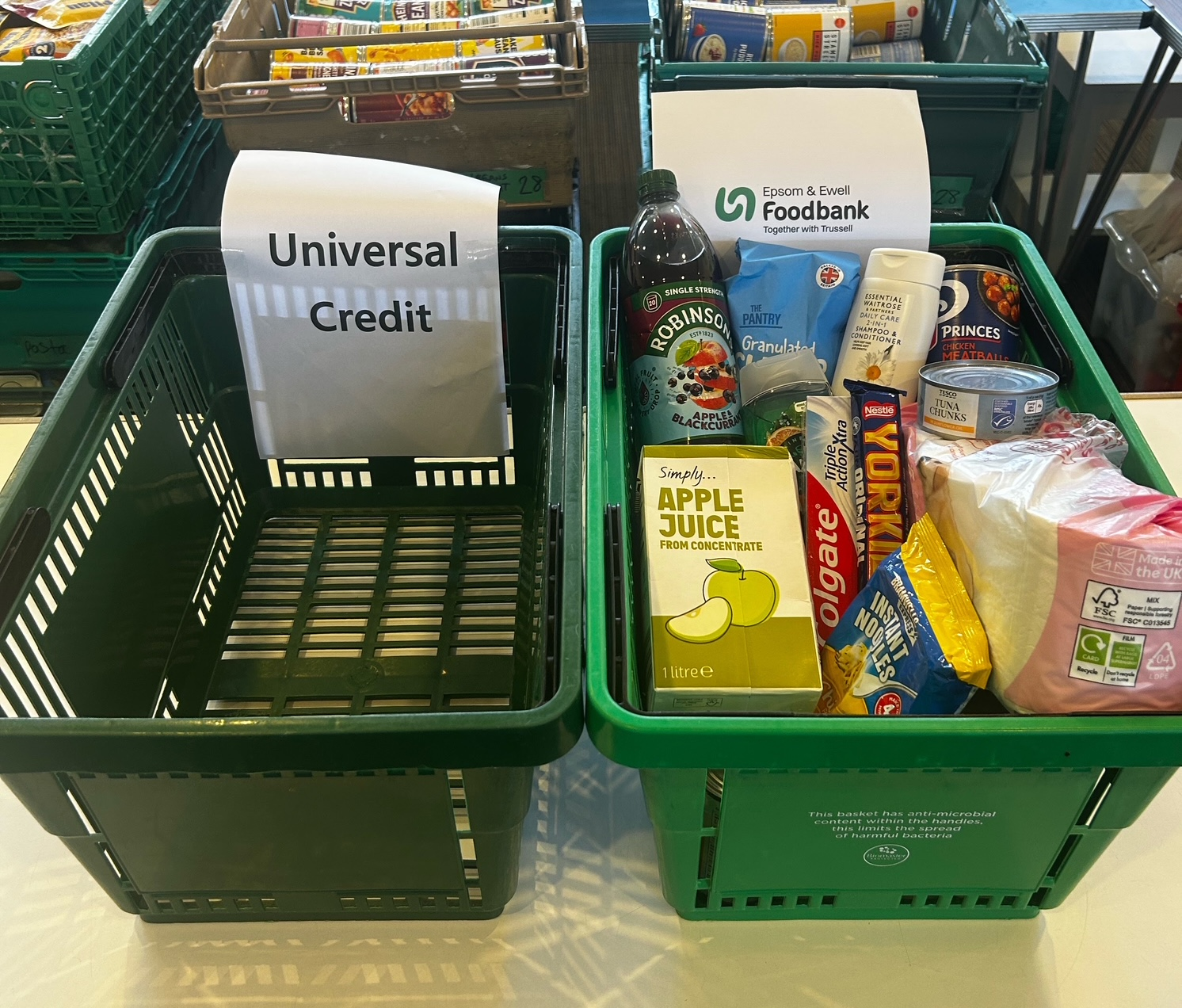
Good Company’s vision is a future free from poverty. One of the issues we hear a lot about from our food bank clients and pantry members is how difficult it is for people living on Universal Credit (UC) to make ends meet.
We were asked to run a workshop by Trussell, a national charity that supports us and a network of other foodbanks across the country, with clients who had direct experience of living on UC. Trussell is collecting information to feed into the inquiry by the All-Party Parliamentary Group on Ending the Need for Food Banks into how the level of support offered by UC is decided. UC is a cash benefit for working age adults of low incomes (including people who are in work or looking for work).
What we heard from our clients:
- Life on UC is a “constant squeeze”. Juggling bills, stretching food, delaying essentials and hoping nothing unexpected goes wrong. The message was clear: support may cover some costs, but it often does not provide enough to live securely.
- The money runs out before the month does. Participants described UC as leaving little or no room for error. A broken washing machine, a school trip payment, new school uniform or a higher energy bill can quickly become a crisis. One person summed it up as feeling like “you’re swimming alone, struggling to stay afloat.”
- Foodbanks are filling the gap. When income falls short, people turn to foodbanks, community fridges, crisis funds, schools, local charities and friends or family. These services are doing far more than providing food. They help with energy costs, clothing, bedding, household items, advice and emotional support. But emergency support should not have to become a long-term substitute for adequate income. The fact that people return again and again shows that the underlying problem has not gone away.
- Work is harder when you don’t have financial stability. Low income does not just affect what people can buy. It affects what they can plan for. Travel to interviews, suitable clothes, childcare, phone costs and medical appointments can all become barriers to work. Financial stress can also make it harder to recover from ill-health, retrain or move towards secure employment.
- A stronger safety net helps everyone. The focus group highlighted a simple truth: people need enough to meet basic costs before they can build stability, look for work, recover their health or support their families. When UC falls short, the pressure shifts onto foodbanks, charities, schools, advice services and communities. A benefit system that prevents crisis, rather than relying on emergency support to patch over it, would make life more secure for households and more sustainable for the services trying to help them.
Participants wanted a system where payments are more in line with inflation and the cost of living, cover their housing costs and allows them the stability and security to make plans and enable them to work, care for themselves and their families without having to rely on crisis support from charities and other organisations.
We are grateful to everyone who took part and shared their experiences so honestly. We have submitted their feedback as part of the inquiry, and we hope this is listened to carefully and helps shape a better approach to setting levels of financial support from Universal Credit.
If you are interested in taking part in participation activities like this one at Good Company and making your voice heard, please contact us at voice@goodcompany.org.uk.